
Buyer’s guide · 6 min
What it really costs to own.
The purchase price is the number everyone compares. It is also the one number that is hard to get wrong. These are the lines that appear after delivery, and the ones worth budgeting before you choose a model.
By Hagen Thiers · updated 21 September 2026
The purchase price, and what it should contain
Published prices on this site are in euro, excluding VAT, duties and site works: OXYLIFE from €44,700 for the I80 capsule and €104,500 to €155,500 for the C2 to C5; Lifetech from €414,000 complete for the C1 Extended. Whether delivery, rigging, installation, commissioning, compressors, oxygen generators, training and the first service sit inside that figure is the question that makes two quotations comparable — or not.
Site works
The building almost always needs something. Typical lines: a strengthened or levelled floor, a widened access route or a temporary opening, five dedicated electrical circuits, a ventilated technical room, a cooling unit sized for the plant, and acoustic treatment between the two. None of it is exotic, and all of it is cheaper decided on a drawing than discovered on delivery day.
This is the single biggest source of budget surprise in private installations, and the reason the location assessment comes before the model choice.
Power
A 5Lifetech C3 draws up to 6 kW across five circuits. The plant runs while the chamber is in use, plus warm-up and cool-down. At three one-hour sessions a day the annual electricity cost is a real but moderate line — calculate it at your own tariff rather than accepting a supplier’s round number, and remember that the technical room’s cooling runs alongside it.
Service, consumables and warranty
Budget an annual service. Consumables are mostly filters, seals and the oxygen concentrator’s own service items. Ask for the interval, the parts list and the labour rate in the quotation.
Warranty is a genuine differentiator here: OxyHelp states two years on the OXYLIFE range with an option to extend to three and service within ten working days worldwide, and five years on the Lifetech line.
Insurance, compliance and operation
A private installation usually needs to be declared to the building insurer. A commercial one needs more: operator training, documented protocols, periodic inspection of the pressure vessel, and — depending on the jurisdiction and whether the chamber is a medical device — supervision requirements. Ask your advisor what applies in your country before the equipment arrives, and get the answer in writing.
Resale and lifespan
A certified rigid chamber is long-lived equipment with a small, specialised secondary market. Interiors date faster than shells, which is an argument for specifying materials you will still like in ten years rather than the most fashionable option available this year. The cost of a chamber you stop using is the whole cost.
Sources
- 5Lifetech C3 Technical Guide, OxyHelp, May 2026
- 5Lifetech & 7Lifetech brochure, OxyHelp
- Luxury Longevity published price list
Prices and specifications are the manufacturers’ published figures, excluding VAT, duties and site works. Nothing on this page is medical advice.
Keep reading
More guides.
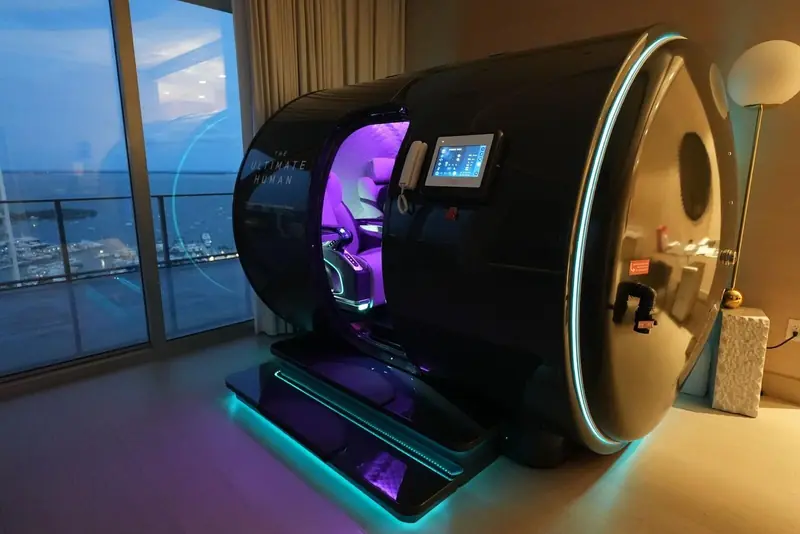 Buyer’s guide · 8 minHow to choose a hyperbaric chamberNine questions that decide which hyperbaric chamber is right: pressure rating, certification, oxygen delivery, seats, the technical room, noise, service and warranty.Read
 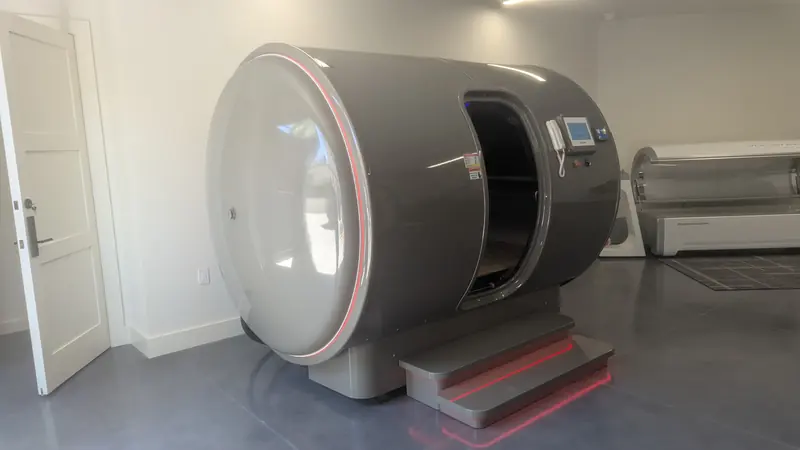 Explainer · 5 minATA, bar and PSI: hyperbaric pressure explainedWhat ATA means, how 1.3, 1.5 and 2.0 ATA differ, why pressure alone does not describe a chamber, and where the regulatory line falls in Europe.Read
 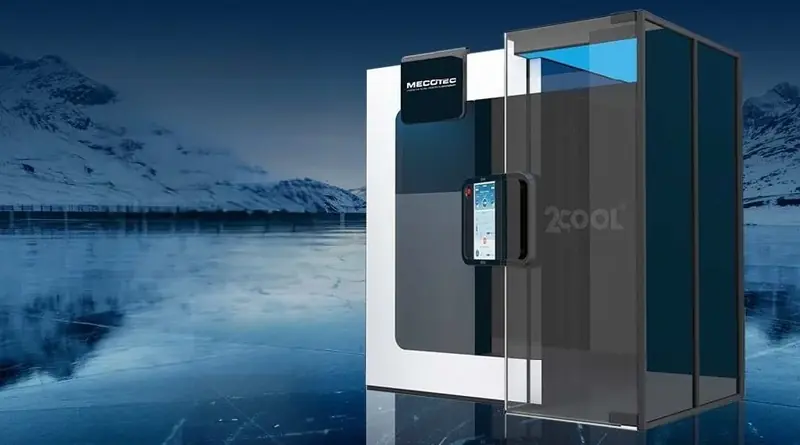 Buyer’s guide · 6 minHBOT, red light, cryotherapy or PEMF — which to installAn honest comparison of hyperbaric oxygen, red and near-infrared light, cryotherapy and PEMF: what a session is, what each needs from a building, and what each costs.Read