
Explainer · 5 min
Pressure, explained.
Pressure is the number every brochure leads with and the number buyers understand least. Here is what it means, what the differences are, and why the figure on its own tells you less than you think.
By Hagen Thiers · updated 21 September 2026
The unit
ATA means atmospheres absolute. At sea level you are at 1 ATA — roughly 1.013 bar, or 14.7 psi. A chamber at 1.5 ATA holds one and a half times that; at 2 ATA, twice. Because the scale is absolute rather than a gauge reading, 2 ATA is one additional atmosphere of applied pressure, not two.
The rough physical equivalent is depth in seawater: 1.5 ATA is about five metres down, 2 ATA about ten.
Why the number varies between chambers
Soft-sided, inflatable chambers are limited by their construction and generally stop between 1.3 and 1.5 ATA. Rigid chambers — steel or acrylic, built as certified pressure vessels — are designed for 2 ATA and beyond. That is a difference of engineering, of certification, and of price, and it is the first fork in any buying decision.
Pressure is not the whole session
Two chambers at the same pressure can give completely different sessions. What else changes it: how the oxygen is delivered and at what concentration, how long the session runs, how fast the chamber pressurises and depressurises, cabin temperature and humidity, and whether anything else is happening inside — light, magnetic fields, movement.
That last point is the whole argument for the Lifetech line, which puts five further modalities inside the pressurised shell rather than treating pressure as the entire proposition.
Where the regulatory line sits
In the European Union, the pressure vessel itself falls under the Pressure Equipment Directive 2014/68/EU. Once a chamber is placed on the market for a medical purpose it is additionally a medical device under Regulation (EU) 2017/745, and higher pressures are generally handled on that route. In practice this is why the same chamber can be offered with a non-medical specification and a medical one, and why the certification status of your exact configuration is a question to settle in writing before ordering, not after.
What the research actually measured
If you read a study, read its protocol. Pressure, session length, number of sessions and oxygen fraction are all part of the result, and findings at one protocol say nothing about another. The frequently cited 2020 Tel Aviv University trial in Aging, for example, ran sixty daily sessions at 2 ATA with intermittent 100% oxygen — a specific and demanding protocol, not a description of hyperbaric therapy in general.
Nothing on this site is medical advice, and no equipment we advise on is presented as treating, curing or preventing any condition. Talk to a qualified physician about whether and how hyperbaric oxygen is appropriate for you.
Sources
- Hachmo et al., “Hyperbaric oxygen therapy increases telomere length and decreases immunosenescence in isolated blood cells,” Aging (Albany NY), 2020
- Pressure Equipment Directive 2014/68/EU
- Regulation (EU) 2017/745 on medical devices
Prices and specifications are the manufacturers’ published figures, excluding VAT, duties and site works. Nothing on this page is medical advice.
Keep reading
More guides.
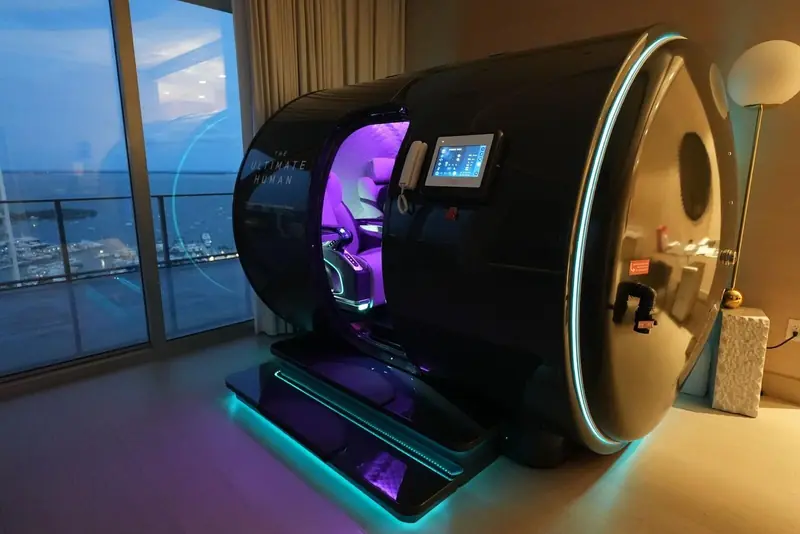 Buyer’s guide · 8 minHow to choose a hyperbaric chamberNine questions that decide which hyperbaric chamber is right: pressure rating, certification, oxygen delivery, seats, the technical room, noise, service and warranty.Read
 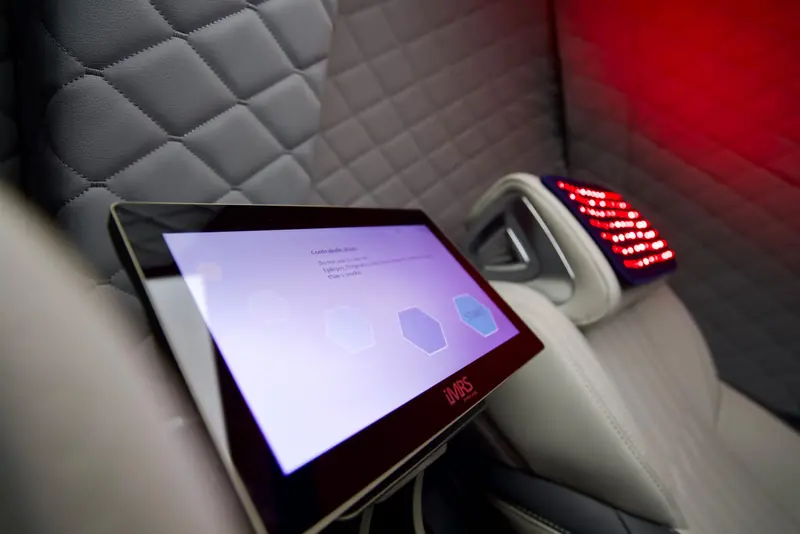 Buyer’s guide · 6 minWhat a hyperbaric chamber really costs to ownBeyond the purchase price: site works, power, servicing, consumables, insurance and the cost lines that only appear after delivery.Read
 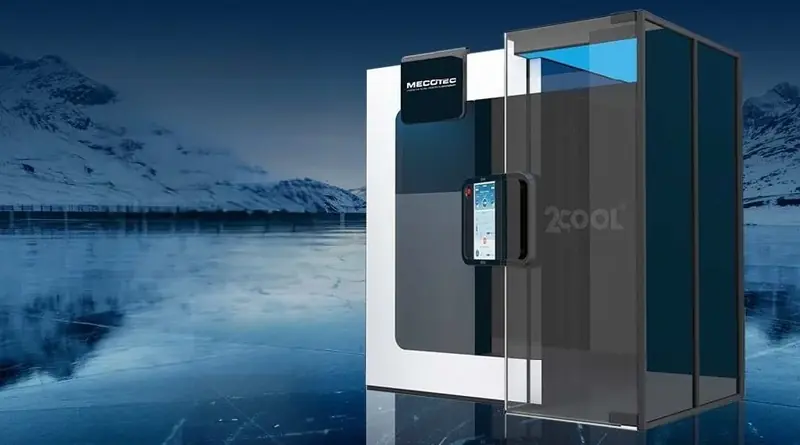 Buyer’s guide · 6 minHBOT, red light, cryotherapy or PEMF — which to installAn honest comparison of hyperbaric oxygen, red and near-infrared light, cryotherapy and PEMF: what a session is, what each needs from a building, and what each costs.Read